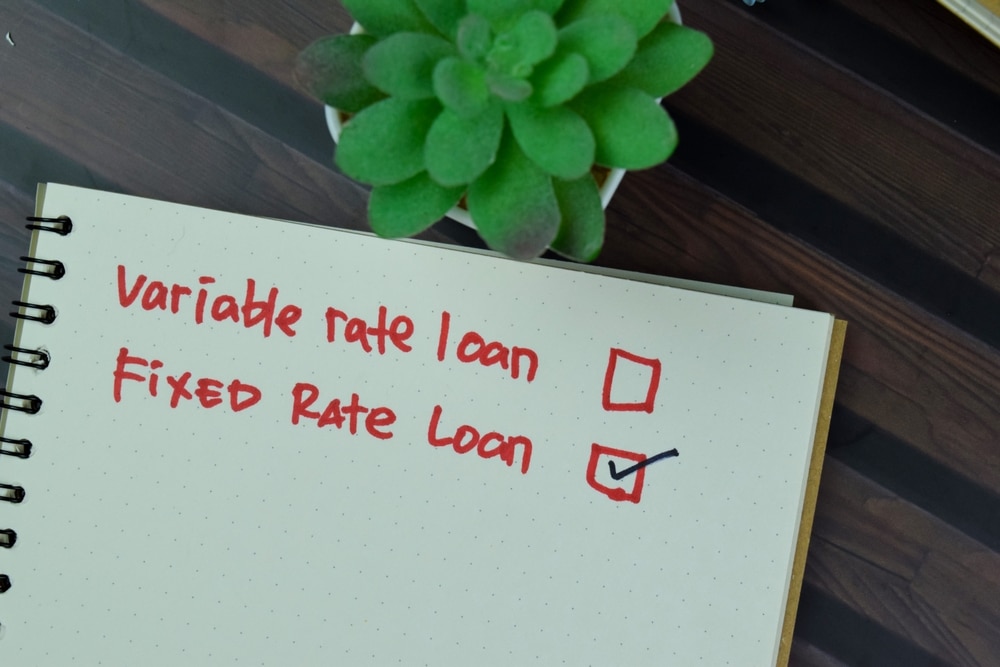
Deciding between a fixed and variable home loan comes down to one trade-off: certainty versus flexibility.
A fixed rate locks in your repayments for a set period, protecting you from rate rises but limiting extra repayments and offset access.
A variable rate moves with the market and comes with more flexibility, but your repayments can go up as well as down.
Interest rates move up and down over time, and neither option is consistently cheaper. It’s worth comparing current rates for your situation rather than assuming one type is always the better deal – for current rates and expert guidance, get in touch with our team.
How a Fixed-Rate Home Loan Works
A fixed-rate loan locks in your interest rate for an agreed term, typically one to five years. Your repayments stay the same for that period regardless of what happens to interest rates in the broader market.
At the end of the fixed term, your loan automatically reverts to your lender’s standard variable rate unless you refix or refinance. Revert rates are often less competitive than the market, so it is worth reviewing your options 30 to 60 days before your fixed term ends.
Most fixed-rate loans place limits on extra repayments during the fixed term, often capped at a set dollar amount per year. Going over this cap, or paying out the loan early, can trigger a break cost. Offset accounts are also usually limited or unavailable on fixed loans, since the lender has committed to funding your loan at that fixed rate for the term.
How a Variable-Rate Home Loan Works
A variable-rate loan moves up or down as your lender adjusts their rates, generally in response to changes in the cash rate and broader funding costs. This means your repayments can change over the life of the loan.
In exchange for that uncertainty, variable loans typically come with more flexibility. Most allow unlimited extra repayments without penalty, and many are paired with an offset account or redraw facility, both of which can reduce the interest you pay over time.
Fixed vs Variable at a Glance
| Factor | Fixed Rate | Variable Rate |
|---|---|---|
| Repayment Certainty | Locked in for the fixed term | Can change with the market |
| Extra Repayments | Usually capped | Usually unlimited |
| Offset Account | Limited or unavailable | Commonly available |
| Exiting Early | May incur break costs | Generally no exit cost |
| Best Suited To | Borrowers wanting budget certainty | Borrowers wanting flexibility or planning to refinance/sell |
What Happens When Your Fixed Term Ends
When a fixed term ends, the loan does not simply stop, it rolls onto your lender’s standard variable rate. This revert rate is often higher than what is available elsewhere in the market. If you do nothing, you could end up paying more than necessary.
The better approach is to review your options before your fixed term expires. This might mean refixing at a new rate, switching to variable, refinancing to another lender, or moving to a split loan. Our team can help you compare these options ahead of your expiry date so you are not caught paying an uncompetitive revert rate.
Break Costs Explained
A break cost (also called an early repayment adjustment or economic cost, depending on the lender) can apply if you pay out or refinance a fixed loan before the end of the fixed term, or if you exceed your extra repayment cap. It is calculated based on movements in wholesale interest rates between when you fixed your loan and when you exit it.
Break costs can be minimal in some circumstances and substantial in others, so it is worth getting an accurate figure from your lender before deciding to break a fixed loan. If you are considering refinancing during a fixed term, we can help you weigh up the break cost against the potential savings.
Split Loans: A Bit of Both
If you cannot decide between fixed and variable, a split loan lets you have both. Part of your loan is fixed and part is variable, in a ratio you choose, commonly 50/50, 60/40 or 70/30.
This gives you some protection against rate rises on the fixed portion, while the variable portion retains access to offset, redraw and unlimited extra repayments. It is a popular option for borrowers who want a measure of certainty without giving up all flexibility.
Which Option Suits You?
If you value predictable repayments and want protection against future rate rises, a fixed rate may suit you better. If you want the flexibility to make extra repayments, use an offset account, or are planning to refinance or sell within a few years, a variable rate is generally the better fit. If you are not sure, a split loan is worth considering.
Every borrower’s situation is different, and the right choice depends on your income, goals and how long you plan to stay in the loan. At Finch Financial, we compare fixed, variable and split loan options across our panel of 40+ lenders to help you find the right fit for your circumstances, whether you are buying in Hurstville, the St George area or wider Sydney. If you are already in a home loan and considering your options, our home loan refinancing page covers what to weigh up before switching.
Contact us today to talk through your fixed, variable or split loan options.
Frequently Asked Questions
Is a fixed or variable rate cheaper?
It depends on market conditions at the time, and rates for both change regularly. Neither option is consistently cheaper, so it is worth comparing current rates for your situation rather than assuming one is always better value.
Can I make extra repayments on a fixed-rate loan?
Usually, but only up to a capped amount, either per year or over the life of the fixed term. Exceeding the cap can trigger a break cost, so check your loan’s specific limit before making large extra repayments.
What happens if I want to refinance during a fixed term?
You can refinance during a fixed term, but a break cost may apply. It is worth getting an accurate break cost figure from your current lender and weighing it against the savings a new loan would offer before deciding.
What happens when my fixed term ends?
Your loan automatically reverts to your lender’s standard variable rate. Since this rate is often less competitive than the market, it is worth reviewing your options 30 to 60 days before your fixed term expires.
Can I split my loan between fixed and variable?
Yes. A split loan divides your borrowing into a fixed portion and a variable portion, giving you some rate certainty while keeping access to features like offset and unlimited extra repayments on the variable part.